
Are you looking for the best WooCommerce alternatives to build an online store? If you are, keep reading this post. Here, we will show you 7 of the best alternatives!
Building an online store no longer means relying solely on WooCommerce. While WooCommerce is a powerful solution for WordPress users, it may not be the best fit for everyone due to performance concerns, setup complexity, or the need for multiple paid extensions.
Many businesses now look for simpler, more scalable, or fully hosted eCommerce platforms that reduce technical overhead and speed up store management. From cloud-based solutions to lightweight selling tools, there are several strong alternatives available.
In this guide, we explore the best WooCommerce alternatives to help you choose the right platform for launching and growing your online store.
First, let’s see what WooCommerce is and what it offers.
WooCommerce: An Introduction
WooCommerce is a WordPress-based eCommerce plugin that allows website owners to turn their sites into fully functional online stores. It supports physical and digital products, flexible shipping options, and a wide range of payment gateways.
One of its biggest strengths is customization, as users can extend its functionality through thousands of themes and plugins. WooCommerce also benefits from being open-source, giving store owners full control over their data and store setup.
However, running a WooCommerce store often requires managing hosting, security, performance, and multiple add-ons, which can increase complexity and costs over time.
This is why many users explore alternative platforms that offer simpler management, built-in features, or hosted solutions with less technical maintenance.
What to Look for in WooCommerce Alternatives
Choosing the right WooCommerce alternative depends on how much control, simplicity, and scalability you want for your online store. A good platform should make it easy to manage products and orders while also supporting growth without adding too much technical complexity.
- Ease of use: The platform should offer an intuitive dashboard and simple setup process so you can launch and manage your store without needing advanced technical skills.
- Payment gateway support: Look for built-in or easy-to-integrate support for popular payment methods, including credit cards, PayPal, Stripe, and local gateways.
- Product and inventory management: It should allow you to manage products, variations, stock levels, and digital or physical goods efficiently.
- Scalability and performance: The solution should handle increasing traffic and product catalogs without slowing down your site or requiring constant upgrades.
- Pricing and fees: Consider monthly costs, transaction fees, and add-on pricing to ensure the platform fits your budget as your store grows.
Best 7 WooCommerce Alternatives for Store Owners
| Platform | Ease of Use | Features | Pros | Cons | Best For | Author Rating |
|---|---|---|---|---|---|---|
| Shopify | Very easy | Hosting, payments, themes, apps | All-in-one solution, reliable | Monthly fees, limited control | Beginners and fast store setup | 4.7/5 |
| Easy Digital Downloads | Easy | Digital product selling, extensions | Lightweight, WordPress-based | Not ideal for physical products | Digital product stores | 4.5/5 |
| BigCommerce | Easy to moderate | Built-in tools, multi-channel selling | Scalable, no transaction fees | More complex than Shopify | Growing businesses | 4.4/5 |
| Ecwid | Very easy | Embeddable store, payment tools | Easy integration with websites | Limited advanced features | Small businesses | 4.2/5 |
| SureCart | Easy | Subscriptions, digital products, automation | Modern UI, lightweight | Newer ecosystem | Creators and memberships | 4.3/5 |
| Magento | Difficult | Advanced catalog, custom workflows | Highly customizable | Resource intensive | Large enterprises | 4.1/5 |
| PrestaShop | Moderate | Store management, themes, modules | Open-source, flexible | Requires technical setup | Mid-size online stores | 4.0/5 |
Let’s have a closer look at each option below.
1. Shopify

Shopify is a fully hosted eCommerce platform that lets you create and manage an online store without worrying about server setup, security, or software updates. It provides an all-in-one environment that bundles hosting, payments, and store management tools.
Users can design their storefront using ready-made themes and extend functionality through a large app marketplace. Shopify supports both physical and digital products, along with inventory tracking, shipping tools, and built-in analytics.
Because it handles most technical tasks in the background, store owners can focus on products, marketing, and customer experience instead of maintenance. Its scalability also makes it suitable for small shops that plan to grow into larger businesses.
Features
- Hosted store platform with built-in security
- Multiple payment gateway options
- Theme-based store design system
- Inventory and order management tools
- App ecosystem for extended features
Pros
- Very easy to set up and manage
- Reliable performance and uptime
- Scales well for growing stores
Cons
- Monthly subscription required
- Limited backend customization compared to open-source platforms
Pricing
Premium platform with subscription-based plans starting at around $39 per month.
2. Easy Digital Downloads
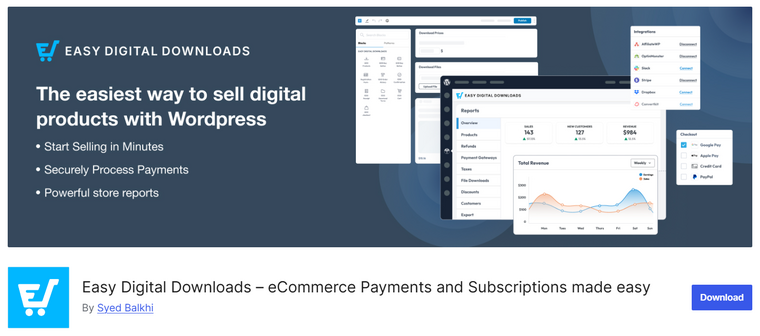
Easy Digital Downloads is a WordPress-based eCommerce plugin built specifically for selling digital products such as ebooks, software, music, and online files. Instead of offering a full physical product shopping system, it focuses on streamlining the delivery of downloadable items and managing licenses and access.
The plugin integrates directly into WordPress, allowing store owners to manage products, customers, and payments from the same dashboard they already use for content. It supports common payment gateways and provides extensions for subscriptions, recurring payments, and software licensing.
Because it avoids features meant for physical inventory and shipping, it stays lightweight and efficient. This makes it a strong WooCommerce alternative for creators and businesses that only sell digital goods.
Features
- Built-in digital product management
- Secure file delivery and download limits
- Multiple payment gateway support
- Extensions for subscriptions and licenses
- Customer and order tracking tools
Pros
- Optimized for digital products
- Lightweight and easy to manage
- Strong WordPress integration
Cons
- Not suitable for physical products
- Many advanced features require extensions
Pricing
Freemium plugin. A free version is available, and premium plans start at around $99.50 per year.
3. BigCommerce

BigCommerce is a fully hosted eCommerce platform designed for businesses that want strong built-in features without relying heavily on third-party apps.
It provides tools for managing products, orders, taxes, and shipping from a single dashboard, while also supporting multi-channel selling through marketplaces and social platforms. BigCommerce is known for its scalability, making it suitable for growing stores that expect higher traffic and larger product catalogs.
Unlike some hosted platforms, it includes many advanced features out of the box, such as SEO tools and flexible product options. Because hosting and security are handled for you, store owners can focus on selling and marketing rather than technical maintenance.
Features
- Fully hosted store platform
- Multi-channel selling support
- Built-in SEO and marketing tools
- Advanced product and inventory management
- Secure and scalable infrastructure
Pros
- Strong built-in features without many add-ons
- Scales well for growing businesses
- No additional transaction fees
Cons
- The interface can feel complex for beginners
- Monthly pricing increases with store size
Pricing
Premium platform with subscription plans starting at around $39 per month.
4. Ecwid
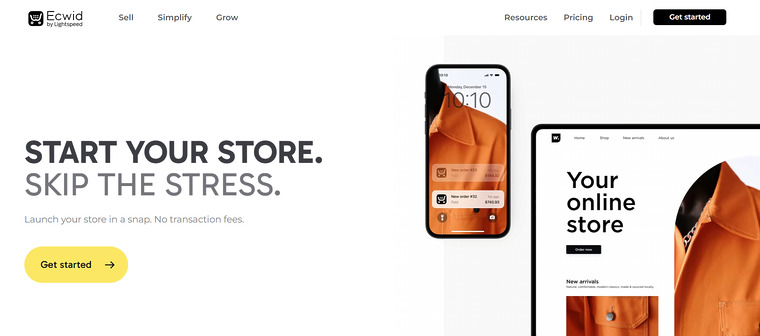
Ecwid is a cloud-based eCommerce platform that lets you add an online store to an existing website or social media page without rebuilding everything from scratch.
It works as an embeddable store system, allowing you to sell products on WordPress, other CMS platforms, and even directly on Facebook or Instagram.
Ecwid focuses on simplicity, making it easy for small businesses to launch quickly with minimal technical setup. It includes built-in tools for managing products, orders, and payments, along with automatic security and updates handled in the background.
Because it is hosted, users do not need to manage servers or complex configurations. This makes Ecwid a practical WooCommerce alternative for small stores and businesses that want multi-channel selling with low maintenance.
Features
- Embeddable store for existing websites
- Multi-channel selling support
- Built-in payment and tax tools
- Inventory and order management
- Automatic updates and security
Pros
- Very easy to set up
- Works across multiple platforms
- No server management required
Cons
- Limited advanced customization
- Fewer features for large stores
Pricing
Freemium platform. A free plan is available, and paid plans start at around $25 per month.
5. SureCart
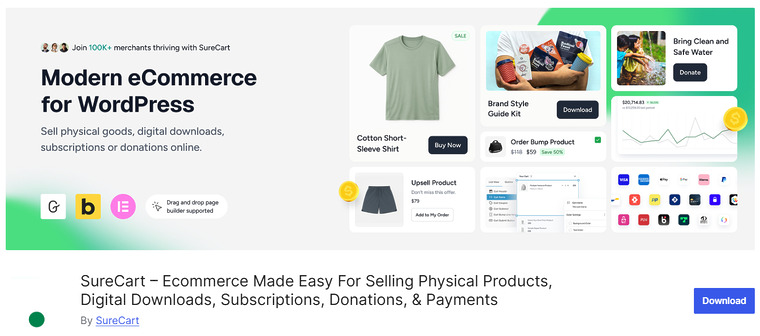
SureCart is a modern eCommerce platform built for selling digital products, subscriptions, and memberships directly from WordPress. Unlike traditional store plugins, it separates the checkout and payment logic from your site’s hosting environment, improving performance and security.
SureCart focuses on simplicity while offering advanced selling tools, including recurring billing, one-click upsells, and automated tax handling. It integrates smoothly with WordPress page builders and membership plugins, making it a good choice for creators, SaaS products, and online course sellers.
Because it does not rely on a heavy product catalog or shipping system, SureCart remains lightweight and easy to manage. Its cloud-based architecture also allows it to scale without placing extra load on your WordPress site.
Features
- Digital product and subscription management
- Built-in checkout and payment processing
- Recurring billing and automated taxes
- Integration with WordPress page builders
- Secure, cloud-based infrastructure
Pros
- Excellent for digital products and memberships
- Lightweight and performance-friendly
- Modern and user-friendly interface
Cons
- Not designed for complex physical product stores
- Smaller ecosystem compared to major platforms
Pricing
Freemium platform. A free plan is available, and paid plans start at around $179 per year.
6. Magento
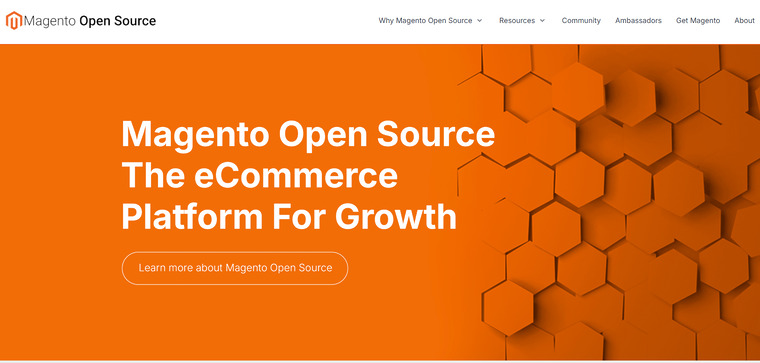
Magento, also known as Adobe Commerce, is a powerful open-source eCommerce platform built for businesses that need advanced customization and scalability. It is designed to handle large product catalogs, complex pricing rules, and high traffic volumes, making it suitable for enterprise-level online stores.
Magento provides extensive control over store design, checkout workflows, and backend operations through its modular architecture. Store owners can add functionality using extensions or develop custom features tailored to their business needs.
It also supports multi-store management, international selling, and advanced reporting tools. However, Magento requires robust hosting infrastructure and technical expertise to set up and maintain, making it less suitable for beginners than hosted platforms.
Features
- Open-source and highly customizable
- Multi-store and multi-language support
- Advanced product and inventory management
- Flexible checkout and pricing rules
- Large extension marketplace
Pros
- Extremely scalable and flexible
- Suitable for complex and large stores
- Strong developer ecosystem
Cons
- Steep learning curve
- High hosting and development costs
Pricing
It has a free open-source version available. The premium extensions and upgrade can be costly.
7. PrestaShop
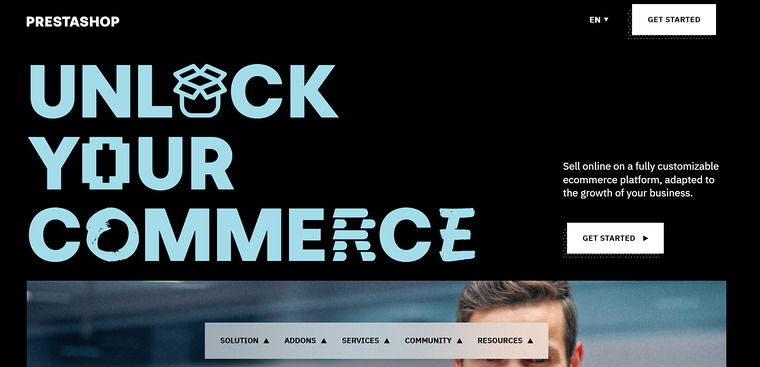
PrestaShop is an open-source eCommerce platform designed for building and managing online stores with high flexibility. It allows store owners to host their shop on their own server and customize nearly every aspect of the storefront and backend.
PrestaShop supports physical and digital products, multiple currencies, and multilingual stores, making it suitable for businesses that sell internationally. It includes core tools for product management, orders, and customer accounts, with additional features available through themes and modules.
Because it is self-hosted, users retain full control over their data and store configuration. However, setting up and maintaining a PrestaShop store usually requires more technical knowledge compared to fully hosted platforms.
Features
- Open-source and self-hosted platform
- Multi-language and multi-currency support
- Product, order, and customer management
- Theme and module system for customization
- SEO-friendly store structure
Pros
- Full control over store data and setup
- Highly customizable
- Suitable for international stores
Cons
- Requires technical setup and maintenance
Pricing
Free core software. Additional costs apply for hosting, themes, and paid modules.
Frequently Asked Questions
Now, let’s take a look at some frequently asked questions and answers about this topic.
Is WooCommerce the best option for every online store?
WooCommerce is a strong choice for WordPress users who want full control over their store, but it is not ideal for everyone. Some businesses prefer hosted platforms that handle hosting, security, and updates automatically, reducing technical work and maintenance.
Are WooCommerce alternatives better for beginners?
Many alternatives are easier for beginners because they offer built-in hosting, guided setup, and preconfigured payment systems. Platforms like Shopify and Ecwid allow users to launch stores quickly without dealing with plugins or server management.
Which WooCommerce alternative is best for digital products?
For selling digital products, platforms designed for downloads and subscriptions work better than traditional shopping cart systems. Easy Digital Downloads and SureCart are popular choices for software, ebooks, and membership-based products.
Are hosted eCommerce platforms more expensive than WooCommerce?
Hosted platforms usually charge monthly fees, while WooCommerce itself is free but often requires paid extensions and better hosting. In many cases, total costs can be similar once you include themes, plugins, and maintenance.
Can WooCommerce alternatives handle large stores?
Yes, some alternatives are built specifically for scalability and high traffic. Platforms like BigCommerce and Magento are designed to support large product catalogs and complex store operations.
Do WooCommerce alternatives support multiple payment gateways?
Most modern platforms support major payment methods, including credit cards, PayPal, and Stripe. Many also include built-in payment processing, reducing the need for third-party plugins or complex configuration.
Should I switch from WooCommerce to another platform?
Switching makes sense if you want less technical maintenance, better performance out of the box, or built-in features without relying on many plugins. However, if you value WordPress’s flexibility and full ownership of your store data, WooCommerce may still be the better option.
Conclusion
Choosing the right WooCommerce alternative depends on how you plan to run and grow your store. If you want an all-in-one hosted solution with minimal setup, Shopify is a strong choice for beginners and fast launches.
For digital products and memberships, Easy Digital Downloads and SureCart offer streamlined tools built for downloads and subscriptions. Businesses that expect rapid growth and multi-channel selling can benefit from BigCommerce, while Ecwid works well for small stores that need easy website integration.
For large, highly customized stores, Magento and PrestaShop provide advanced flexibility. Ultimately, the best platform is the one that matches your technical comfort level, budget, and long-term business goals.
Which platform are you going to use?
Let us know in the comments.


